
It doesn’t necessarily need to be meant always serious, but sometimes even postings with a twinkle in the eye are worth publishing. The job offering in the New York Times of January 2, 1972 impressively describes what is expected from a project manager:

Advertisement for a facilities planning and development project manager
Personable, well-educated, literate individual with college degree in Engineering to work for a small firm. Long hours, no fringe benefits, no security, little chance for advancement are among the inducements offered. Job requires wide knowledge and experience in manufacturing, materials, construction techniques, economics, management and mathematics. Competence in the use of the spoken and written English is required. Must be willing to suffer personal indignities from clients, professional derision from peers in the more conventional jobs, and slanderous insults from colleagues.
Job involves frequent extended trips to inaccessible locations throughout the world, manual labor and extreme frustration from the lack of data on which to base decisions.
Applicant must be willing to risk personal and professional future on decisions based upon inadequate information and complete lack of control over acceptance of recommendations by clients. Responsibilities for the work are unclear and little or no guidance is offered. Authority commensurate with responsibility is not provided either by the firm or its clients.
Applicant should send resume, list of publications, references and other supporting documentation to…
found in: Harold Kerzner, Project Management, p. 164/165
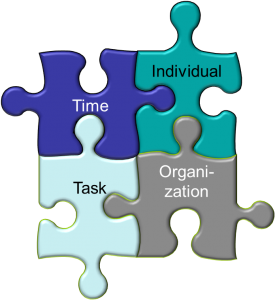 The issues are not the main problem
 Waiting burns money and trust! Therefore act early, i.e. before the project is right in front of the wall (milestone, penalties etc.). The earlier you recognize and tackle the issues the smaller your losses are. And you have more options for measures or negotiations as well.
 Sustainable change for prevention
 It’s not astonishing the the report sub-titles this year again “The high Cost of low Performance“, because the statistic rate of projects that miss their schedule, cost or benefit objectives partly or totally, unfortunately has nearly remained at the same high level as last year.
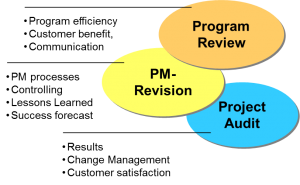 Not a solitary case as experience shows
 Different treatment of crisis situation at companies vs. projects
 At public authorities in many countries problems mostly are pre-programmed „in the system“. Processes and instructions for solicitation and seller selection, like German VOB, are pre-defined in nuclear detail; after that projects are expected to strictly follow the contracts. Project management often does not exist at all or is limited to coordination without authority; mostly it is also contracted to the supplier. The faith in regulations washes clean from all insufficiencies outside the rules and blocks self-reliant initiatives for improvement. It really takes a very prominent “bad case”, highly political and too big to die, and a very prominent external savior from the political environment to make a significant setting the course happen. Let’s not examine his own competence to recover projects…

 The case:
 onsite at the customer without having real competences and access to resources. Sales, driven by commission interests, often threw badly cleared orders and unrealistic delivery promises over the fence at the projects. At the installation sites, in particular with international orders, regional sales interests, mentality or working habits frequently spoiled fulfilment to plan. Suppliers and customers often had a weak organizational maturity to achieve provisions as planned. Thus many projects were “deeply red” already at order confirmation; the involved units’ own lives prevented from targeted project management, and their individual striving for profit made an overall optimization of project margins impossible.