This statement sounds hard at first sight, but the impacts always are accompanied by burning very much (tax) money. My experiences and looks behind the scenes of political projects however have shown:
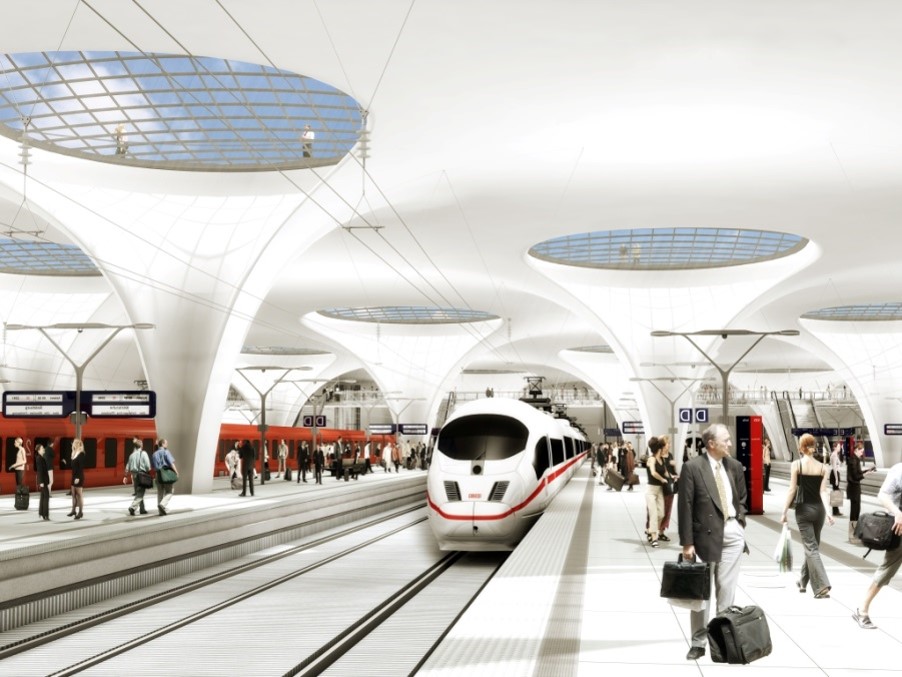
- Mega projects like Nürburgring, BER, Stuttgart 21, Elbphilharmony or Selling Hahn Airport are always rather driven by political (e.g. self-profiling) than economic interests. Sometimes they even serve only to damage another project from a political opponent, or actually, like the mega real estate deal Stuttgart 21, (private) economical motives…
- If the responsible politicians, claiming to be poor but sexy, even propagate that cost increases of 50% and more were “completely normal” with such projects, it is going to be a self-fulfilling prophecy.
- The causes are already with the approval process: To launch the project through the boards cost needs to be calculated down and benefits nice. It is totally clear from the beginning that after approval in the political committees the majority of ignored cost needs to come on top again – self cheating and betraying the tax payers!
- Public projects have a planning and preparation phase lasting years or even decades. During this span of time political actors may change many times, and with them their political interests. This usually comes with deep impacting project scope changes, completed work not seldom ends up on the dumping grounds of history, planning becomes obsolete, contracts must be cancelled with expensive annulment contracts, new expert judgments to the new interests are mandated and contracts to new beneficiaries awarded.
- While all tenders are strictly following the processes (e.g. VOB) all responsible players are watching to cover their backs. After the assignments are done they are out of the responsibility, the contractors have free rein – mostly without any control by the project owner, merely rather from the media…
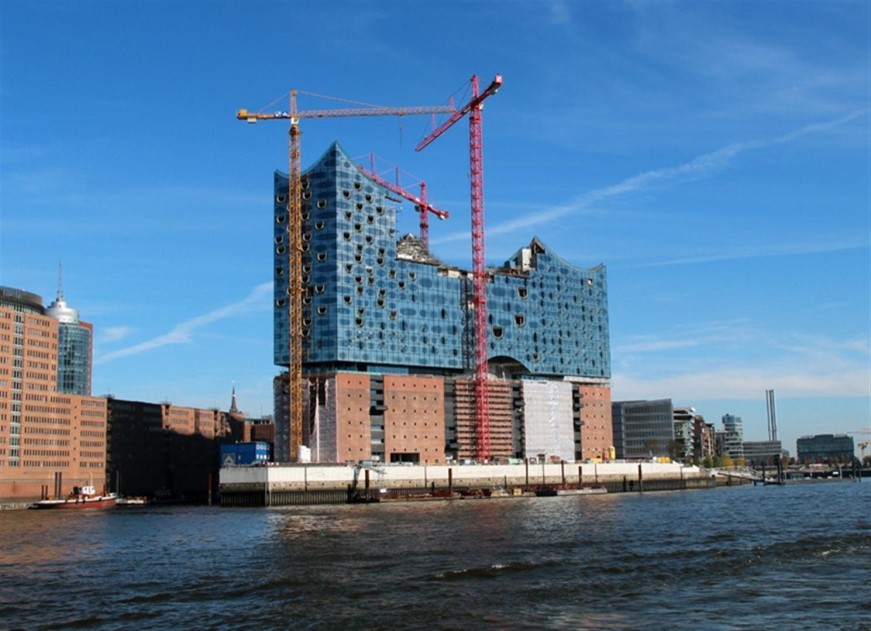
- If then, as happened with BER, a planning office particularly engaged for overall project steering addresses the mistakes made and re-calculates, these project managers are fired in fear of transparency and the trades are left alone with upcoming, uncoordinated dynamics. At the Elbphilharmony the Prime Major pulled the emergency break and appointed the main supplier for general contractor granting a generous fix price of necessity. Thus finally an economical interest returned into the project and it was completed – expensive but admittedly beautiful !
The last topic also shows that there is – understandably – very few interest in transparency at political projects. That means that it is not allowed to address the issues’ root sources in such projects. That is why they cannot be recovered, and we always can only hope that political pressure increases fast enough until, as in Hamburg, politicians must put an end to the expensive madness. But Lessons Learned for the future are not to be expected where it is not the own money to loose…
Read more Lessons Learned…
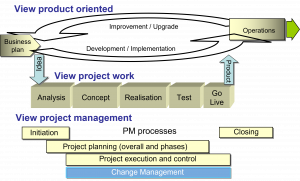 and during this time developing something new and unique (product or
  There is very few focus on skills or an education in what I understand with project management, i.e. professional handling of uncertainty, risk, changing scope, schedule and cost planning, team building, team and supplier coordination, communication, leadership etc., actually planning and controlling the project. It seems to be not critical or necessary in this kind of fairly controlled environment, or it is thought to be easily done “at the side”. In many companies there is a technical lead responsible for this kind of work, and the project managers often care for many projects in parallel.
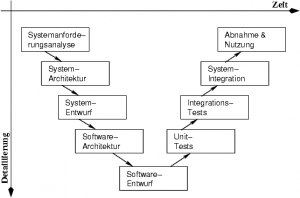 creative activities are necessary besides technical work. Therefore the presence of uncertainty and risk is incomparably higher, exchange of ideas, team communication and collaboration are critical success factors.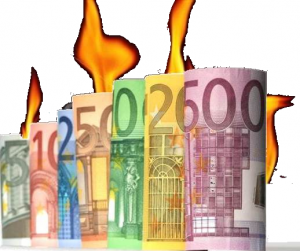
 PMI members have already received mail, for all others it is available here: The new PMI Pulse of the Profession Report is out. Again it is constituted that companies with a higher maturity in project management have better and more profitable projects – seems to be no wonder. But different to the preceding years the study for the first time since five years has detected an improvement of meeting project objectives: “Only” 9.7% of the investment sum were “burnt”, that is 20% less than the year before!
 In Computerwoche Magazine’s issue of 12. June 2012 the authors Marcus Berger (Director EMM Consulting) and Dr. Thomas Henkelmann (Director Consulting Sevices, TPG The Project Group, München) write about Project Portfolio Management (PPM) and the pitfalls which come up for companies without a structured PPM. The article is in German.
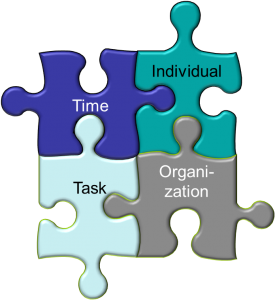 Four major root causes
 In one of my case studies (
 If you want to lead a project successfully you need, similar as in other professions, a good, methodical education which includes recognizing the specific project situation’s requirements and reasonably applying the adequate tools and techniques situatively and virtuously. That’s at project management like with craftsmanship where you find trainees, advanced and masters.
 Therefore a good project manager would not have undergone flaws like in our case because he would have taken care for a clear target and task definition from the start, and would have requested his superiors’ support consequently – for the sake of his project and himself. His planning would have based on realistic assumptions, and he would have identified and escalated risks and deviations and initiated counter measures early.
 To achieve he also needs another skill: leadership qualities. He is his project’s manager, responsible for the result, and he must steer his team and his superiors so that each one contributes his part to the whole. Not an easy task, in particular if the company doesn’t work project affine. And not everybody is the person for a leadership role, feels well in it. But if he takes his job serious he will apply project management including leadership consequently. Otherwise he will soon become a scape goat if the project fails. Not a very motivating perspective, or a subject for opportunistic PM nomads who sometimes call themselves project managers…
 Another frequent factor for troubled projects is time. I don’t mean the duration granted to the project for execution. This actually should always be sized realistic, not determined by wish thinking or arbitrarily. That means it must be based on realistic estimates done by the executing team members and taking the interdependences and frame conditions into account. Therefore “duration” falls into the category “Individual” for me, i.e. that the project manager does a competent job.
 In fact many statistics, e.g. the one at
  So the predominant part of project issues arises out of an insufficient support from the executing organization, which in turn is founded in the project culture, the management’s and established organization’s mindset.